
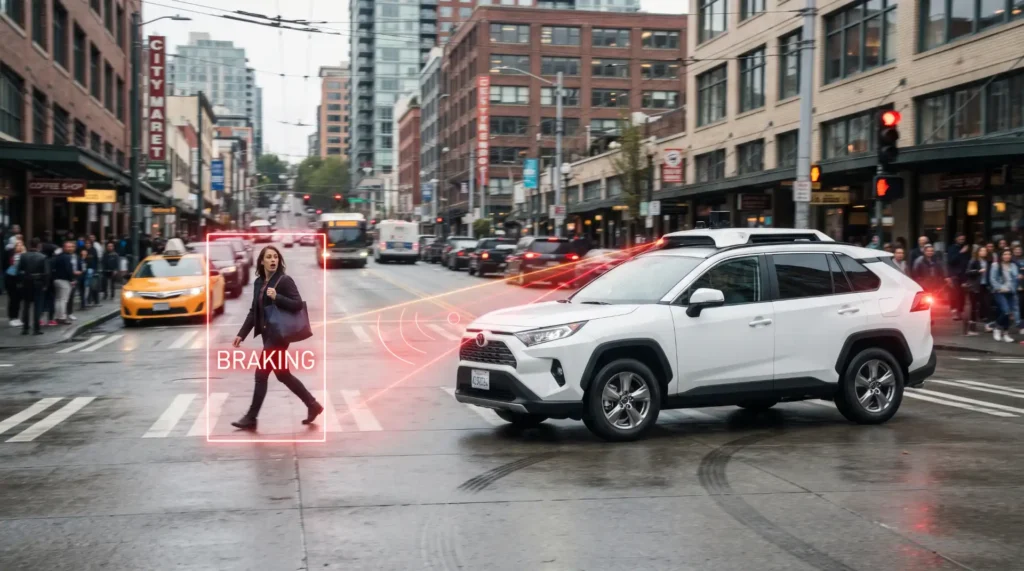
Vehicle crashes remain one of the leading causes of preventable injuries in the United States. Every year, millions of drivers, passengers, pedestrians, and cyclists are affected by collisions caused by factors such as distracted driving, speeding, impaired driving, poor visibility, and delayed reaction times. While traditional safety features such as seat belts, airbags, and anti-lock braking systems have significantly improved vehicle protection, modern technology is introducing new ways to prevent crashes before they happen.
Artificial intelligence (AI) safety systems are becoming an important part of modern transportation safety. These systems use cameras, radar, sensors, machine learning algorithms, and real-time data processing to identify potential dangers and assist drivers in avoiding collisions. From automatic emergency braking to lane assistance technology, AI-powered features are changing how vehicles respond to hazards on American roads.
Although artificial intelligence cannot eliminate every accident, these technologies are designed to reduce human error, improve driver awareness, and help prevent serious injuries. As more vehicles are equipped with advanced safety systems, understanding how these technologies work can help drivers make informed decisions about vehicle safety.
How Artificial Intelligence Is Improving Vehicle Safety
Human error plays a significant role in many traffic collisions. Drivers may become distracted by mobile devices, fail to notice a vehicle entering their blind spot, misjudge stopping distances, or react too slowly to sudden hazards. AI safety systems are designed to provide additional support by continuously monitoring the driving environment.
Unlike traditional vehicle features that mainly protect occupants after a crash occurs, many AI-based technologies focus on preventing collisions entirely. These systems analyze information from multiple sources, including cameras, radar sensors, GPS data, and vehicle movement patterns.
For example, a vehicle equipped with AI-powered safety technology may recognize that another vehicle has suddenly stopped ahead. The system can alert the driver and, in certain situations, automatically apply the brakes to reduce the likelihood or severity of a collision.
The National Highway Traffic Safety Administration (NHTSA) has identified advanced driver assistance systems as an important area of development for improving roadway safety in the United States.
External resource: National Highway Traffic Safety Administration (NHTSA)
Automatic Emergency Braking and Crash Prevention
Automatic emergency braking (AEB) is one of the most recognized AI-supported vehicle safety features available today. This technology uses sensors and cameras to detect obstacles, vehicles, pedestrians, or other potential collision risks.
When the system determines that a crash may be unavoidable without intervention, it can warn the driver or automatically activate the brakes. The goal is not necessarily to prevent every collision but to reduce impact speed and minimize injuries.
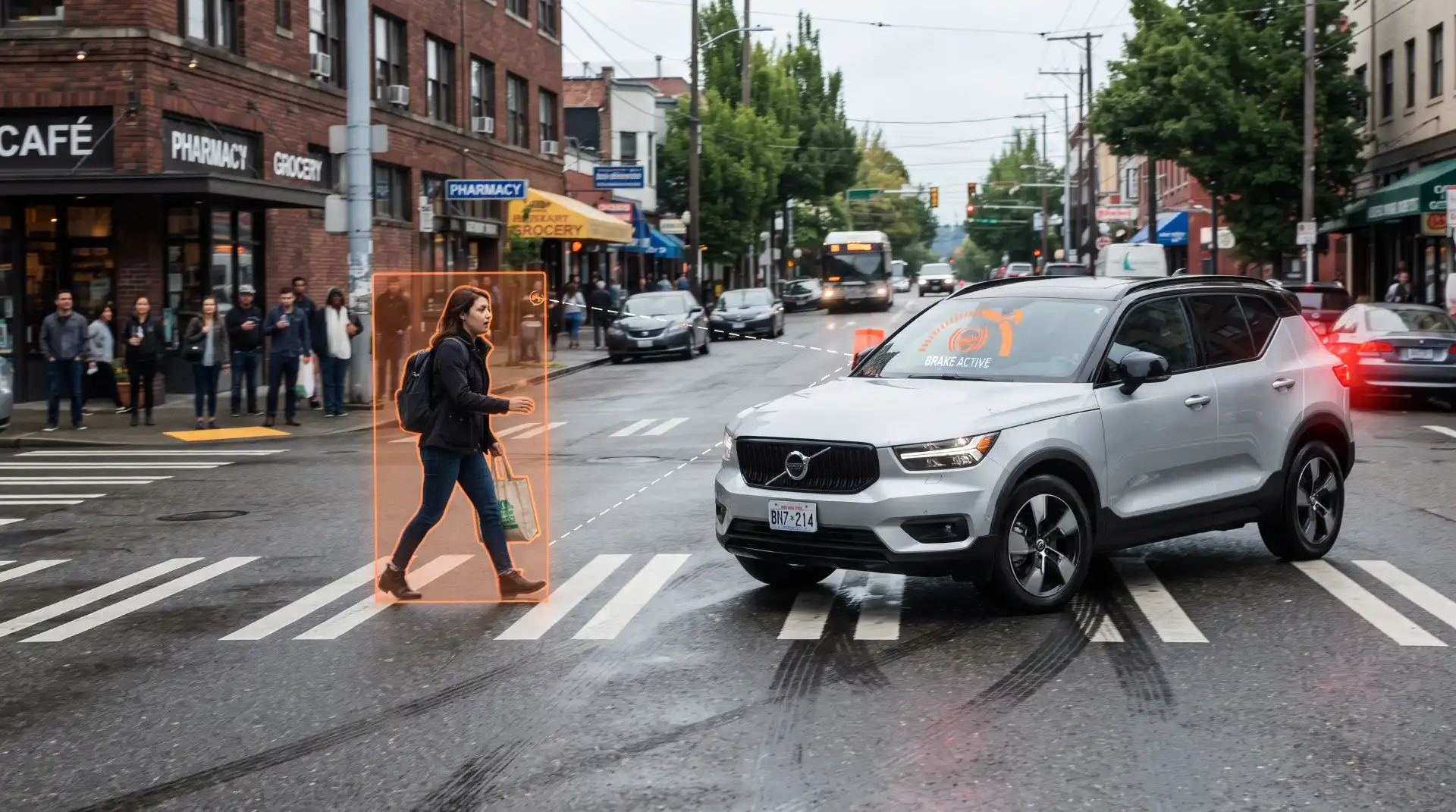
This technology is especially valuable in situations where drivers have limited reaction time. For example, a driver traveling through a busy intersection may not immediately notice a pedestrian stepping into the roadway. An automatic emergency braking system with pedestrian detection may provide an additional layer of protection.
Reducing vehicle speed before impact can make a major difference in injury outcomes. Lower collision speeds generally result in less severe forces being transferred to vehicle occupants and vulnerable road users.
AI-Powered Pedestrian and Cyclist Detection
Pedestrians and cyclists are among the most vulnerable people on American roads. Unlike vehicle occupants who benefit from airbags, seat belts, and vehicle structures, people outside vehicles have limited protection during a crash.
AI-powered detection systems are designed to identify pedestrians and cyclists by analyzing images captured through vehicle cameras. These systems can recognize movement patterns and help drivers respond to potential dangers.
Urban areas, parking lots, school zones, and residential neighborhoods can create situations where pedestrians suddenly enter a vehicle’s path. Advanced detection technology may help drivers react faster and reduce the likelihood of serious injuries.
However, drivers should never rely entirely on technology. Safe driving habits, including reducing speed in pedestrian areas and remaining alert, continue to be essential for preventing injuries.
Lane Departure Warning and Lane Keeping Assistance
Unintentional lane departures are another common cause of roadway crashes. Drivers may drift into another lane because of fatigue, distraction, medical emergencies, or reduced attention.
Lane departure warning systems use cameras to monitor road markings and detect when a vehicle begins moving outside its lane without a turn signal. When this occurs, the system can provide an alert to remind the driver to correct their position.
Lane keeping assistance technology can take this a step further by providing gentle steering adjustments to help keep the vehicle centered. These systems are particularly useful during long highway trips where driver fatigue may become a factor.
While these features can provide valuable support, they are not designed to replace an attentive driver. Drivers must continue monitoring traffic conditions and maintaining control of their vehicles.
Blind Spot Monitoring and Safer Lane Changes
Blind spots continue to be a major safety concern for drivers. Even careful drivers may fail to see another vehicle traveling beside them, especially when changing lanes on highways or multi-lane roads.
AI-supported blind spot monitoring systems use sensors to detect vehicles located in areas that mirrors may not fully capture. When another vehicle is detected, the system may provide a warning through dashboard indicators, sounds, or steering feedback.
By improving driver awareness, blind spot monitoring can help reduce unsafe lane changes and prevent certain side-impact collisions.
Driver Monitoring Systems and Preventing Distracted Driving
Distracted driving continues to be a major safety concern throughout the United States. Texting, smartphone use, eating, adjusting vehicle controls, and other distractions can take a driver’s attention away from the road.
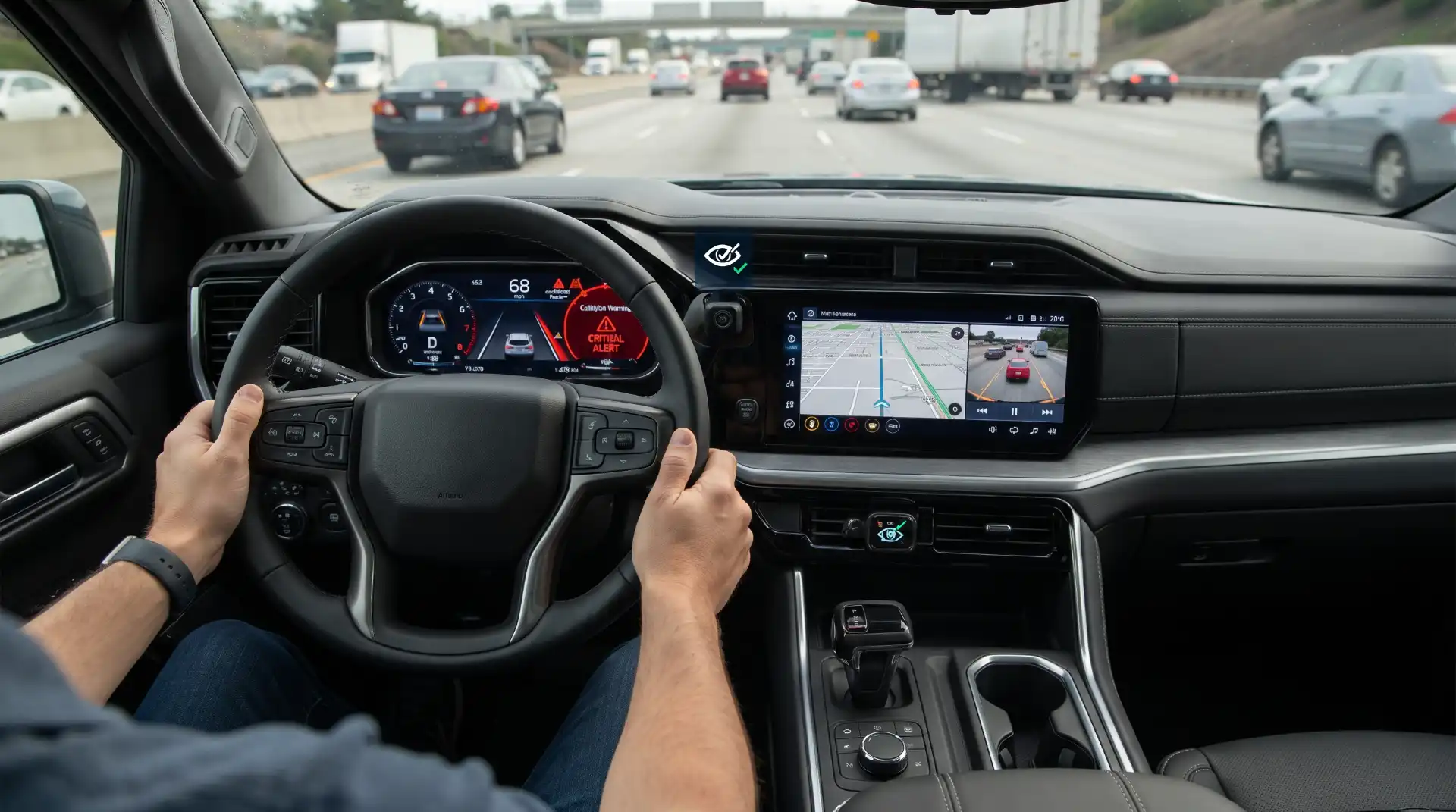
Some newer vehicles include driver monitoring systems that use cameras and sensors to evaluate driver attention. These systems may detect signs that a driver is not looking at the road or may be experiencing fatigue.
Driver monitoring technology can provide alerts encouraging drivers to refocus their attention. As vehicle automation becomes more advanced, monitoring driver engagement is expected to become increasingly important.
The Role of AI in Reducing Human Error
One of the biggest benefits of artificial intelligence safety systems is their ability to assist with situations where human reaction time may not be enough. Even experienced drivers can make mistakes, especially during unexpected situations.
AI technology can process information faster than humans and provide warnings within fractions of a second. This additional reaction time may help drivers avoid collisions or reduce the seriousness of crashes.
However, technology should be viewed as a safety supplement rather than a replacement for responsible driving. Drivers remain responsible for following traffic laws, maintaining awareness, and making safe decisions.
Limitations of Artificial Intelligence Vehicle Safety Systems
Although AI technology continues to improve, these systems have limitations. Weather conditions, poor visibility, damaged sensors, road construction, and unusual driving situations can affect system performance.
For example, heavy rain, snow, fog, or dirt covering cameras and sensors may reduce the ability of certain systems to accurately identify hazards.
Drivers should also understand that advanced safety features do not make a vehicle fully autonomous. Most consumer vehicles available today still require active driver attention and control.
The Future of Artificial Intelligence and Transportation Safety
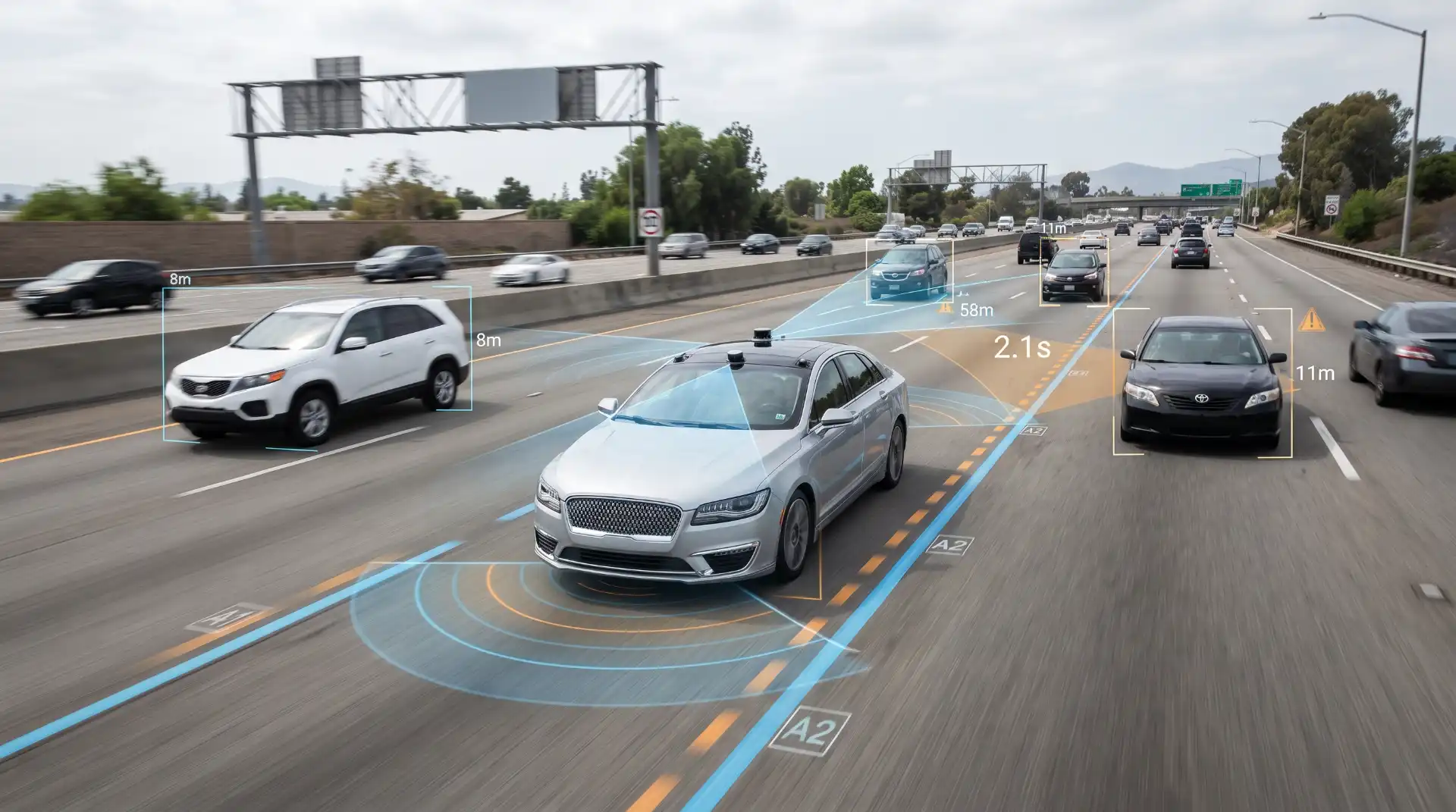
The future of vehicle safety will likely involve continued improvements in artificial intelligence, automation, and connected vehicle technology. Manufacturers are developing systems that can better predict dangerous situations and communicate with other vehicles and infrastructure.
Future advancements may include improved crash prediction, enhanced pedestrian protection, smarter traffic management, and more reliable automated driving assistance.
As these technologies become more common, they may help reduce preventable crashes and create safer transportation systems throughout the United States.
How Drivers Can Maximize Vehicle Safety Technology
Drivers can get the most benefit from AI safety systems by understanding how their vehicle’s features work and using them correctly. Owners should read their vehicle manuals, keep sensors clean, maintain their vehicles properly, and avoid assuming that technology can replace safe driving behavior.
Combining advanced safety technology with responsible driving practices creates the strongest protection against preventable injuries.