
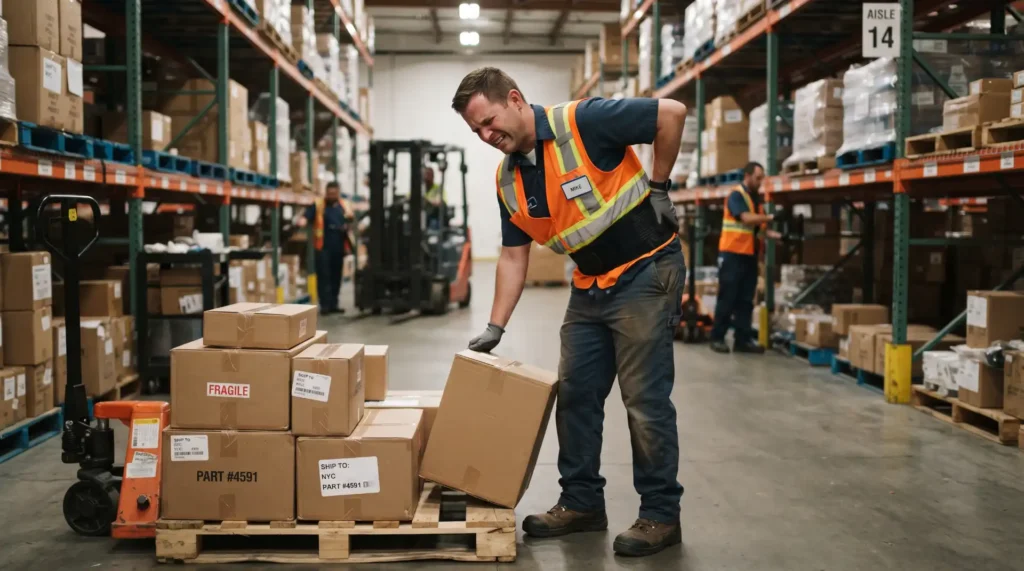
Warehouse worker injuries have become an increasingly important workplace safety issue as Americans rely more heavily on fast shipping and home delivery. Modern distribution centers move enormous quantities of goods through complex systems involving workers, forklifts, conveyors, loading docks, robots, and delivery vehicles. This fast moving environment can expose workers to strains, falls, collisions, heat, and other hazards.
The growth of the delivery economy has expanded the number of people working inside fulfillment centers, warehouses, sorting facilities, and distribution hubs. According to the Occupational Safety and Health Administration, employment in warehousing and storage more than doubled between December 2015 and December 2025. OSHA reported growth from about 882,100 workers to more than 1.8 million during that period.
That expansion has placed greater attention on warehouse safety. OSHA renewed its National Emphasis Program on Warehousing and Distribution Center Operations in 2026. Inspections under the updated program began July 31, 2026. The agency continues to focus on hazards involving forklifts, material handling, ergonomics, heat, falls, emergency exits, and fire protection.
Understanding where warehouse injuries come from can help workers and employers recognize risks before an incident occurs.
Why Warehouse Worker Injuries Remain a Major Safety Concern
Warehouses may appear orderly from the outside, but their daily operations involve constant movement.
Workers unload trucks, move pallets, scan merchandise, pick products, prepare orders, pack boxes, operate equipment, and load outgoing shipments. Some facilities process thousands of items throughout a single shift.
These activities create several overlapping safety risks.
A worker may repeatedly bend and reach while selecting products. Another employee may move heavy packages between a conveyor and pallet. Forklifts may operate only a few feet from pedestrian areas. Loading dock workers may handle freight around trailers, ramps, and elevated edges.
The pace of distribution adds another layer.
Customers have grown accustomed to rapid shipping. Retailers and logistics companies have built supply chains designed around quick order processing. That system depends heavily on warehouse workers performing physical tasks accurately and efficiently.
Speed does not automatically create unsafe conditions. However, demanding physical work combined with inadequate training, poor facility design, fatigue, or equipment problems can increase injury risks.
OSHA currently identifies ergonomics, material handling, forklifts, hazardous chemicals, slips, trips, falls, and robotics among important warehouse hazards. The agency states that musculoskeletal disorders associated with overexertion are among the most common warehouse injuries.
Readers looking for a broader overview can also explore Workplace Injury Types and How to Prevent Them.
Musculoskeletal Injuries From Lifting and Repetitive Work
Warehouse work often requires frequent physical movement.
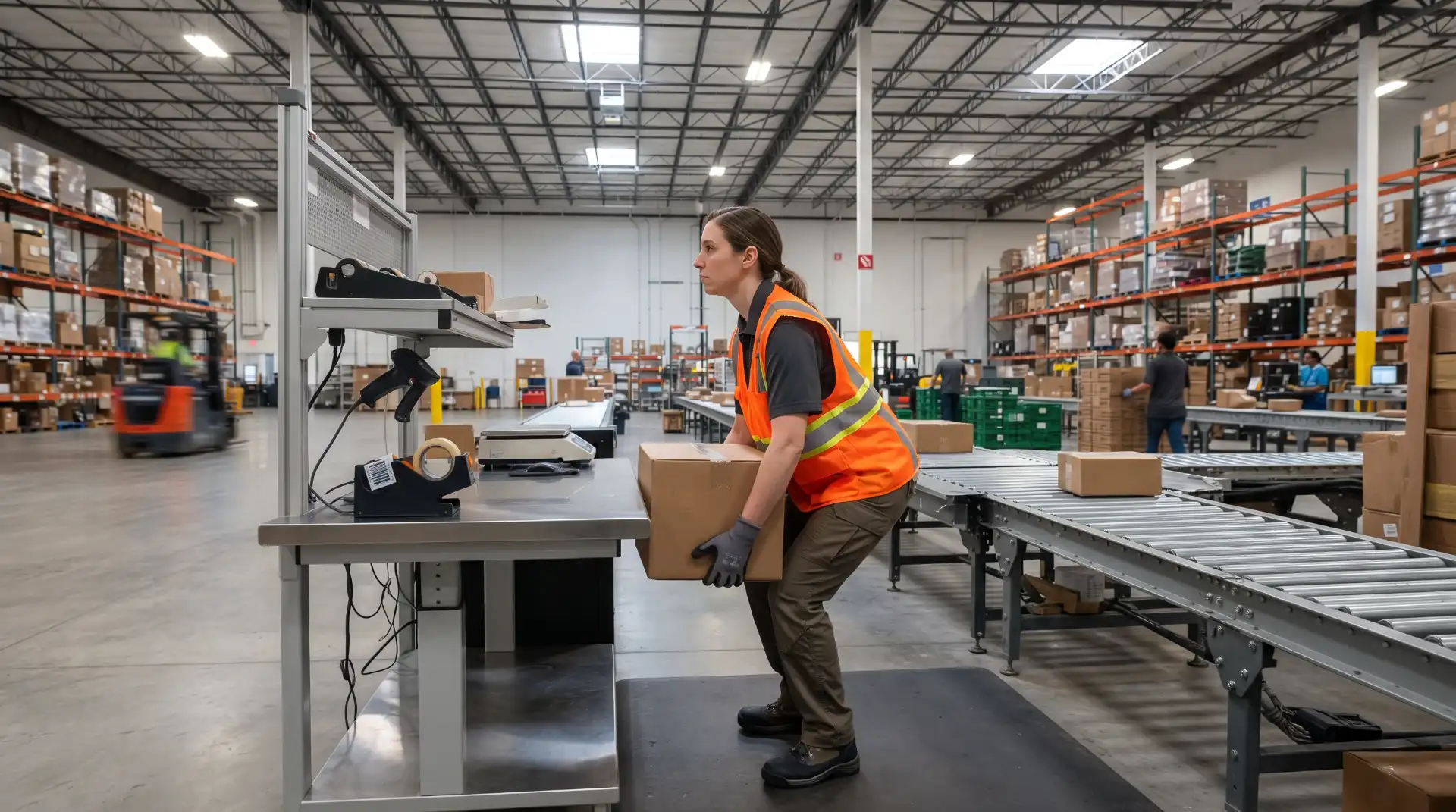
Employees may lift boxes from the floor, remove products from shelves, place packages onto conveyors, push carts, pull pallet jacks, or reach above shoulder height.
One lift may not seem particularly demanding. Repeating similar movements hundreds of times can place considerably more stress on the body.
Musculoskeletal injuries can affect the lower back, shoulders, neck, knees, wrists, hands, and other areas. Workers may experience muscle strains, tendon irritation, joint pain, or other conditions associated with repeated physical stress.
Lower back injuries are particularly relevant in jobs involving frequent lifting.
A worker may bend at the waist while reaching for a package located deep inside a container. Another employee may twist while moving an object between work surfaces. A package may also weigh more than expected, causing the worker to react suddenly.
Fatigue can further affect lifting mechanics.
As muscles become tired, posture may change. Workers may start leaning, twisting, or using awkward movements they avoided earlier in the shift.
Warehouse design can reduce some of these exposures.
Frequently handled products can be positioned within comfortable reaching zones. Mechanical lifting devices may help workers handle heavy or awkward objects. Adjustable workstations can also reduce excessive reaching or bending.
OSHA includes ergonomic risks among the focus areas of its current warehouse enforcement program.
Repetitive Motion Injuries Can Develop Gradually
Not every warehouse injury involves one dramatic incident.
Some develop after days, weeks, or months of repeated movement.
A worker who scans packages throughout a shift may perform thousands of similar hand and wrist movements. Another worker may repeatedly reach into storage bins. Packing employees may fold cartons, tape packages, move products, and perform similar motions throughout the day.
These tasks can place repeated stress on muscles, tendons, and joints.
Symptoms may begin as mild discomfort. A worker may notice soreness after a shift or stiffness the following morning. Without changes to the activity, discomfort may become more persistent.
Workers should not assume that an injury needs one identifiable accident before it matters.
Persistent pain, numbness, weakness, tingling, swelling, or reduced movement may justify medical evaluation. Early assessment can help determine whether symptoms relate to a strain, repetitive use condition, nerve problem, or another cause.
Job rotation, ergonomic workstation design, mechanical assistance, task variation, and appropriate rest periods can help address repetitive physical demands.
The issue is not limited to warehouses. Injuries.wiki also discusses similar concerns in Work From Home Musculoskeletal Strain and Ergonomic Injuries.
Forklift Accidents and Warehouse Traffic
Forklifts are essential to modern warehouse operations.
They move pallets and heavy materials far more efficiently than manual handling. However, forklifts operate within spaces often shared by pedestrians, storage racks, trailers, loading docks, and other equipment.
That combination creates serious collision hazards.
A forklift may strike a worker walking through an aisle. A vehicle may overturn during an improper turn. Loads may fall from raised forks. Workers may also become caught between powered equipment and a fixed object.
Visibility can become challenging near intersections, tall shelving, stacked merchandise, and busy loading areas.
Warehouse traffic systems can help separate people from moving equipment.
Marked pedestrian paths, mirrors at blind intersections, barriers, designated crossing points, speed controls, and adequate lighting can all contribute to safer movement.
Training also matters.
Forklift operators need to understand equipment limitations, load stability, pedestrian hazards, and facility specific traffic procedures.
OSHA lists powered industrial trucks among the major hazards receiving attention under its renewed warehouse program.
Conveyor Belt Injuries
Conveyor systems help fulfillment centers move products quickly across large facilities.
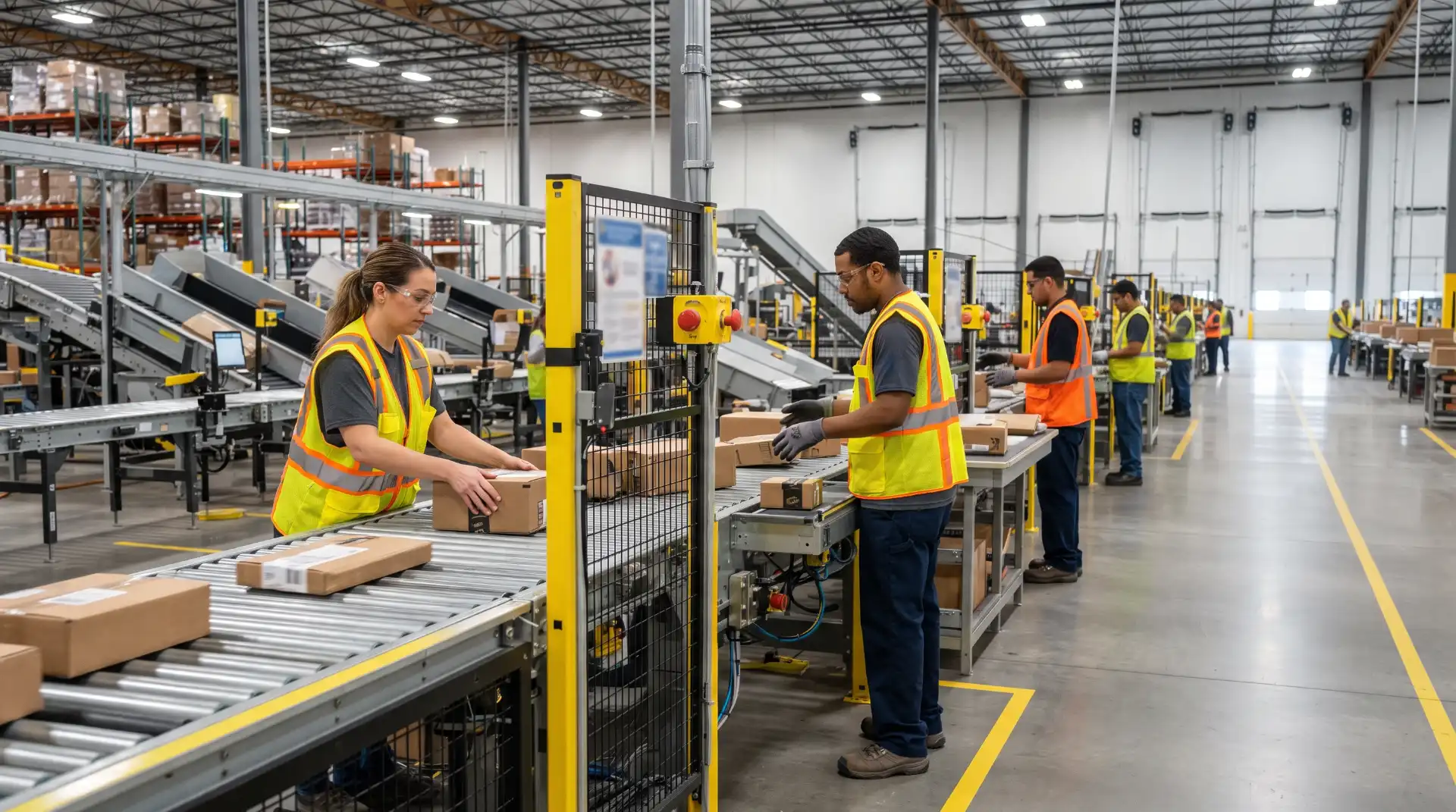
Workers may interact with these systems while sorting, scanning, packing, loading, or clearing products.
Moving conveyor components can create caught in and pinch point hazards.
Loose clothing, hair, fingers, hands, or other body parts may come into contact with moving machinery. Workers can also suffer injuries while attempting to clear jams or retrieve objects from equipment.
Proper guarding plays an important role around moving components.
Facilities also need clear procedures for equipment maintenance and jam removal. Workers should understand when machinery needs to stop before they approach a hazardous area.
OSHA’s warehouse safety resources identify conveyor hazards involving pinch points, falling products, and ergonomic stress from awkward or repetitive movements.
Automation may change how workers interact with warehouse equipment, but it does not remove the need for hazard recognition.
Slips Trips and Falls Inside Warehouses
A warehouse floor can change quickly throughout a shift.
Shrink wrap may fall into an aisle. Liquids can spill. Damaged pallets may leave pieces of wood on walking surfaces. Packages can temporarily block pathways.
Any of these conditions can contribute to a fall.
Workers may also encounter uneven surfaces, ramps, stairs, loading dock edges, ladders, and elevated platforms.
A simple fall can cause substantial injuries.
Common outcomes include ankle sprains, knee injuries, wrist fractures, shoulder injuries, back injuries, and head trauma.
Housekeeping remains one of the most basic methods for controlling these risks.
Aisles should remain clear. Spills should receive prompt attention. Damaged walking surfaces should be addressed. Lighting should allow workers to see changes in floor conditions and obstacles.
Loading docks deserve particular attention because workers may operate close to an elevated edge while concentrating on freight movement.
For more information about these hazards, readers can visit Common Causes of Slip and Fall Accidents.
Falling Merchandise and Improperly Stored Materials
Warehouses often rely on vertical storage to use available space efficiently.
Pallet racks may extend several levels above workers. Boxes, products, and materials can therefore create struck by hazards when stored improperly.
Poor stacking may cause merchandise to shift or fall.
Damaged pallets can also fail under a load. Forklift contact with storage racks may affect stability. An improperly positioned item may fall when another product gets removed.
Even relatively small items can injure someone when they fall from substantial height.
Head, shoulder, neck, and upper body injuries can occur when workers are struck by merchandise.
Storage practices should consider weight, stability, rack capacity, and accessibility.
Heavier products commonly belong in positions where workers can handle them without unnecessary overhead lifting. Materials should remain stable rather than leaning into aisles or pedestrian areas.
Regular rack inspections can also identify impact damage or other structural concerns.
Loading Dock Injuries
Loading docks connect warehouse operations with the transportation network.
They are also one of the areas where several hazards meet.
Workers may move around trailers, forklifts, pallet jacks, dock plates, freight, and elevated edges. Trucks may enter and leave throughout the day.
A worker can fall from a dock. A forklift may move unexpectedly toward the edge. A trailer may shift while loading occurs. Workers may also become caught between equipment or freight.
Communication between warehouse employees and drivers matters during loading operations.
Facilities can establish procedures describing when trailers may move, how vehicles get secured, and who controls loading activity.
Workers also need clear visibility around dock areas.
Lighting, markings, barriers, and maintained dock equipment can help reduce unnecessary risks.
Heat Stress Inside Distribution Centers
Warehouse heat is another concern, particularly during summer.
Large buildings may contain areas with limited cooling. Workers performing physical labor generate additional body heat, and loading docks may expose employees to outdoor temperatures.
Heat stress can cause weakness, dizziness, headache, nausea, confusion, cramping, and other symptoms.
Severe heat illness can become a medical emergency.
The renewed 2026 OSHA warehouse program specifically includes heat hazards among inspection priorities.
Employers can consider ventilation, access to drinking water, appropriate rest opportunities, heat acclimatization practices, and training on warning signs.
Workers should also recognize symptoms in coworkers.
A person experiencing confusion, collapse, or other severe symptoms after heat exposure needs prompt medical attention.
Fatigue and Long Physical Shifts
Warehouse injuries do not occur only because of equipment or environmental hazards.
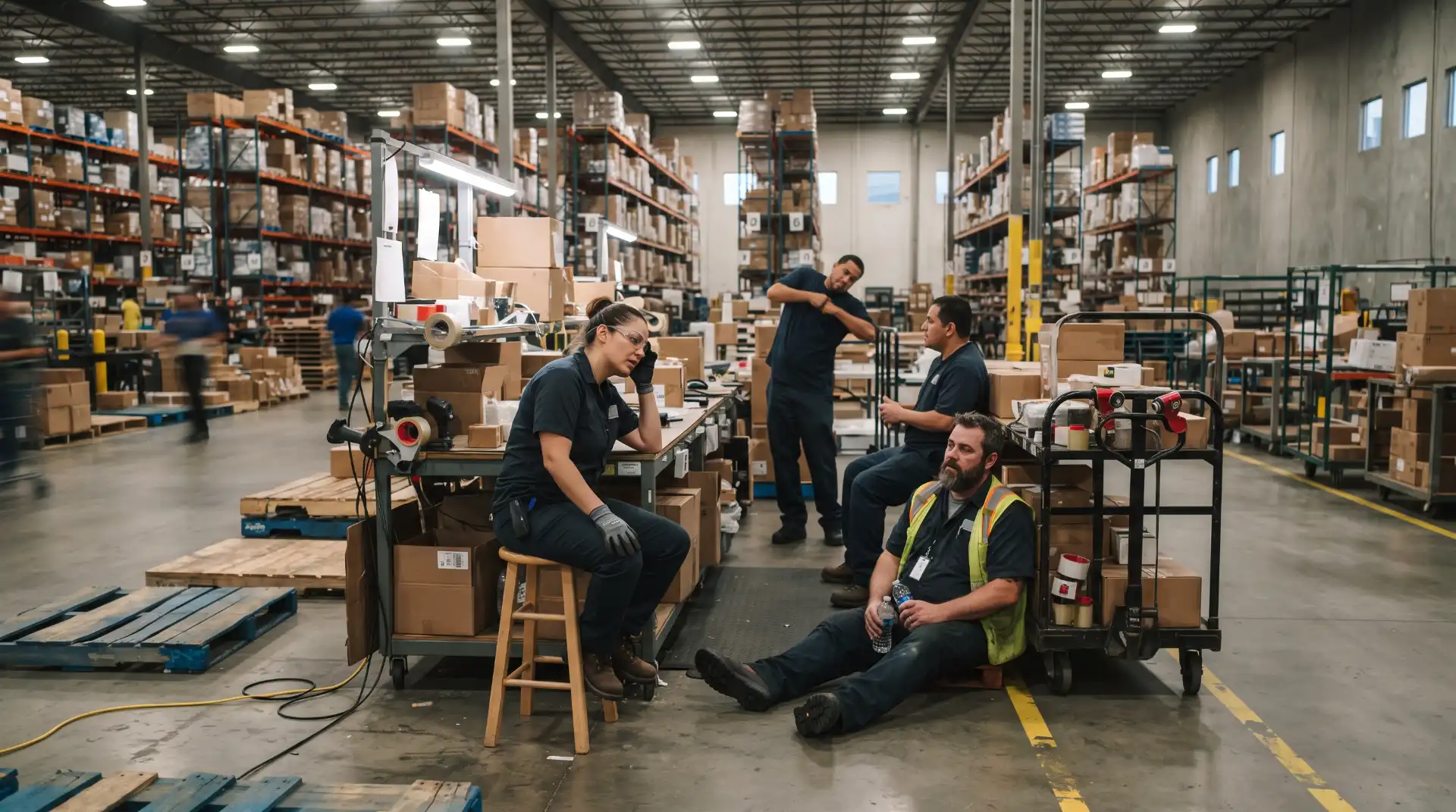
Fatigue can influence safety throughout a shift.
Physically demanding work can reduce strength and concentration over time. Repetitive tasks may also make it harder to maintain attention.
A tired worker may respond more slowly to a forklift approaching an intersection. Another may use poor lifting technique late in a shift. Small mistakes can become more significant around heavy materials and powered equipment.
Workplace planning should account for human physical limitations.
OSHA’s warehouse guidance notes the value of appropriate periodic rest for employees performing physical work.
Job design matters as much as individual awareness.
Automation Is Changing Warehouse Safety
Modern warehouses increasingly use robotics and automated systems.
Robots may move shelving units, transport goods, sort packages, or assist with picking and packing.
Automation can remove some physically demanding tasks. It can also introduce new interactions between employees and machines.
Workers may operate near autonomous mobile robots or automated storage systems. Maintenance employees may need access to machinery when problems occur.
These environments require clear separation rules, emergency procedures, equipment guarding, and training.
OSHA now specifically identifies robotics as one of the potential hazards associated with modern warehousing.
Technology should support safer work rather than simply increasing the speed of production.
Seasonal Demand Can Change the Risk Environment
Warehouses often experience significant changes in workload throughout the year.
Holiday shopping, major sales events, weather emergencies, and product launches can increase order volume.
Facilities may hire temporary or seasonal employees during these periods.
New workers may be less familiar with warehouse traffic patterns, equipment, emergency procedures, and physical demands.
This makes training especially important.
Experienced workers may also face changing schedules or additional workloads during peak periods.
Maintaining safety practices during busy periods can help prevent production demands from overshadowing hazard controls.
Common Warehouse Injuries Workers Should Recognize
Warehouse injuries vary widely because the environment contains several types of hazards.
Back strains may follow heavy or repetitive lifting. Shoulder injuries can develop after frequent reaching. Wrist and hand conditions may result from repetitive scanning or packing.
Falls may cause fractures, sprains, or head injuries.
Forklift incidents can result in crushing injuries, fractures, or other serious trauma.
Workers struck by falling merchandise may experience head, neck, shoulder, or back injuries.
Cuts and lacerations can occur while opening packages or handling damaged materials.
Heat related illnesses may develop after prolonged work in hot conditions.
Some symptoms appear immediately. Others become more noticeable after a shift ends.
Workers should pay attention to pain that persists, weakness, numbness, dizziness, reduced movement, significant swelling, or other unusual symptoms.
What Workers Can Do After a Warehouse Injury
Medical needs come first after an injury.
Emergency injuries require immediate assistance. Less obvious injuries may still need evaluation when symptoms persist or interfere with normal movement.
Workers should follow their employer’s procedures for reporting workplace incidents.
A clear report can document when and where an injury occurred. Details may include the task being performed, equipment involved, witnesses, and environmental conditions.
Workers should also keep personal records related to medical visits and workplace communications when appropriate.
Workers’ compensation systems vary by state, so filing procedures and deadlines differ across the United States. Employees with questions about their specific situation may need information from their state’s workers’ compensation agency or qualified professional.
Reporting hazards can also help prevent similar incidents.
A damaged rack, malfunctioning conveyor, blocked walkway, or recurring ergonomic problem may expose other employees to the same risk.
Ways Employers Can Reduce Warehouse Injury Risks
Warehouse injury prevention works best when safety becomes part of facility design and daily operations.
Training forms one part of that system, but training alone cannot control every hazard.
Employers can examine whether workers need to perform unnecessary heavy lifting, twisting, reaching, or carrying. Mechanical equipment can reduce some physical demands.
Traffic planning can separate forklifts from pedestrians where practical.
Facilities can also inspect racks, conveyors, ladders, docks, floors, and emergency exits regularly.
Near miss reports provide another source of information. An incident that causes no injury today may reveal a condition capable of causing a serious injury later.
Worker feedback can identify problems that managers may not see during a brief inspection.
The OSHA Warehousing Safety and Health Topics page provides U.S. employers and workers with information about common warehouse hazards, applicable safety standards, and prevention resources.
Why Warehouse Safety Matters in the Delivery Economy
The modern delivery economy depends on warehouse workers.
Every package moving from a manufacturer to a customer’s doorstep may pass through several facilities. Workers sort, lift, scan, pack, transport, and load those goods throughout the process.
As distribution networks expand, workplace safety needs to grow alongside them.
OSHA’s updated warehouse initiative reflects the scale of the issue. The agency reported that warehouse and distribution related industries experienced injury and illness rates above baseline private general industry rates during the 2020 through 2024 period covered by its analysis.
Federal injury data also shows that overexertion and repetitive motion, falls, and contact incidents continue to account for large numbers of workplace cases across private industry.
Warehouses combine many of these hazards in one environment.
That does not mean injuries are inevitable.
Thoughtful facility design, effective training, maintained equipment, reasonable work practices, ergonomic improvements, clear traffic systems, and worker participation can reduce exposure to common hazards.
The Future of Warehouse Worker Safety
Warehousing continues to evolve.
Artificial intelligence, robotics, automated storage systems, wearable technology, and advanced tracking tools are changing how products move through distribution centers.
Some technologies may reduce lifting and other physically demanding tasks.
At the same time, workers may encounter new risks as they share work areas with automated equipment.
Future warehouse safety programs need to evaluate technology based on both productivity and worker health.
A system that moves packages faster still needs appropriate safeguards. Workstations should fit the people using them. Automated equipment should operate within clear safety controls.
Employers also need to account for changing climate conditions, especially in facilities exposed to summer heat.
The delivery economy may continue changing, but the central safety principle remains straightforward. Workers need environments designed around realistic human capabilities.
Final Thoughts
Warehouse worker injuries deserve greater attention as distribution centers become more important to everyday American life.
Workers in these facilities may face ergonomic strain, repetitive motion, forklift traffic, falls, falling merchandise, loading dock hazards, conveyor injuries, heat exposure, and fatigue.
The growth of automation adds another layer to warehouse safety.
Preventing injuries requires more than asking employees to be careful. Employers can examine work processes, facility design, equipment, training, staffing, and physical demands together.
Workers also benefit from understanding common hazards and reporting unsafe conditions before someone gets hurt.
The rapid delivery economy depends on people working behind the scenes. Protecting those workers remains an essential part of building a safer and more sustainable distribution system.