Pickleball has quickly grown from a niche pastime into one of the most popular recreational sports in the United States. Its appeal is easy to understand. The game is social, relatively easy to learn, and accessible to people of many ages and fitness levels. Community centers, neighborhood courts, retirement communities, and athletic clubs across the country have embraced it. Yet as participation rises, so do reports of pickleball injuries. What looks like a low-impact activity can still place significant stress on the body, especially when players move suddenly, twist awkwardly, or fall while trying to reach a fast shot.
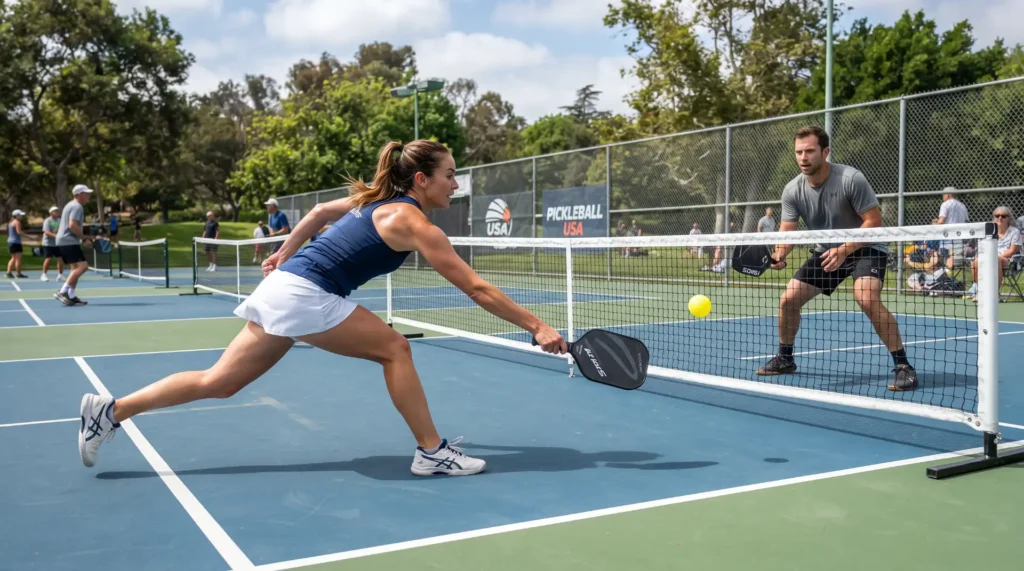
The increase in injuries is not surprising. Pickleball involves quick lateral movement, abrupt stops, forward lunges, overhead reaching, and repeated use of the shoulder, elbow, wrist, and knees. Many newer players jump into regular games without much warm-up or conditioning. Others are returning to sports after years of lower activity and may not realize how demanding repeated play can be. The result is a wide range of problems, from minor muscle strains to serious fractures and head injuries.
Understanding the most common pickleball injuries can help recreational athletes make smarter decisions before they step onto the court. This guide explains why these injuries happen, the body parts most often affected, warning signs that should not be ignored, and practical prevention tips for players who want to stay active and safe.
Why Pickleball Injuries Are Increasing
One reason pickleball injuries are increasing is simple exposure. More people are playing, and they are playing more often. In many parts of the U.S., courts are busy from morning until evening. Tournaments, leagues, drop-in sessions, and social games keep players on the court multiple times a week. More participation naturally creates more opportunities for injury.
Another factor is the player demographic. Pickleball attracts adults of all ages, including many middle-aged and older adults who appreciate its smaller court and approachable learning curve. While that broad appeal is a strength, it also means the sport includes people with varying fitness levels, previous injuries, joint degeneration, osteoporosis, balance limitations, or reduced reaction time. A fast pivot, trip, or collision can have more serious consequences in these situations.
There is also the issue of perception. Because pickleball is often viewed as gentler than tennis or basketball, some players underestimate the physical demands. They may skip proper shoes, neglect warm-ups, or play too many games in one day. Overconfidence can be especially risky for beginners who have not yet developed efficient footwork or body control. Even a single misstep while backpedaling or chasing a ball can result in a painful fall.
The Most Common Pickleball Injuries
Although almost any part of the body can be injured during pickleball, certain patterns appear again and again. Fractures, sprains, strains, and overuse injuries are among the most frequent complaints.
Fractures From Falls
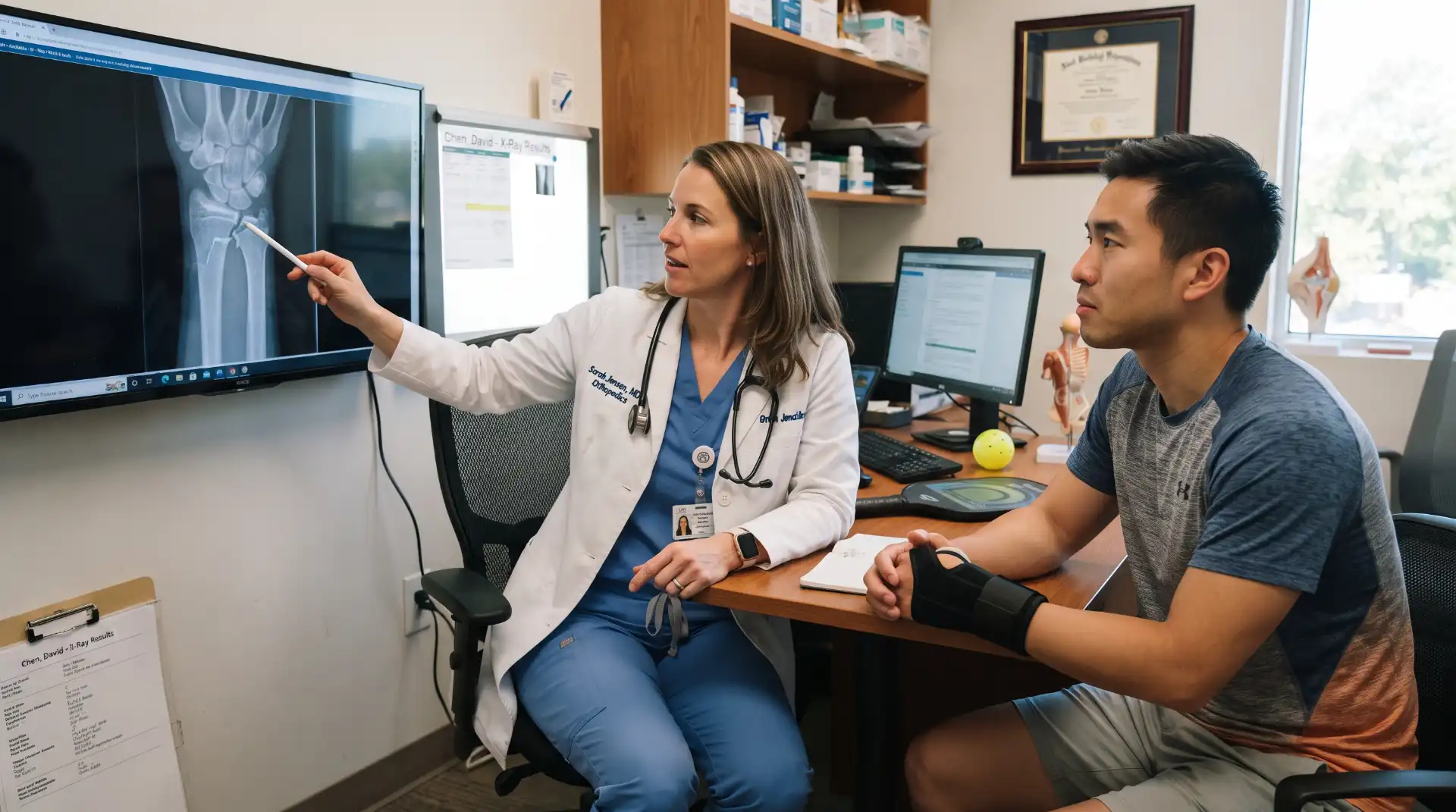
Fractures are one of the most serious pickleball-related injuries, and they often happen when a player falls trying to recover a difficult shot. A fall onto an outstretched hand can lead to a wrist fracture, which is especially common among adults who instinctively use their hands to break a fall. Finger fractures may also occur if a ball strikes the hand awkwardly or if the player’s finger gets jammed while gripping the paddle.
Hip fractures are another major concern, particularly among older adults. A sideways fall can cause a fracture that requires surgery and a long recovery. Shoulder fractures and collarbone injuries may happen when a player lands hard on the upper body. In some cases, the injury is obvious right away, with severe pain, swelling, and limited movement. In others, the person assumes it is only a bruise or sprain and delays medical evaluation.
A fracture should never be ignored. If there is visible deformity, inability to bear weight, intense swelling, or sharp pain that does not improve, prompt medical care is important.
Ankle Sprains
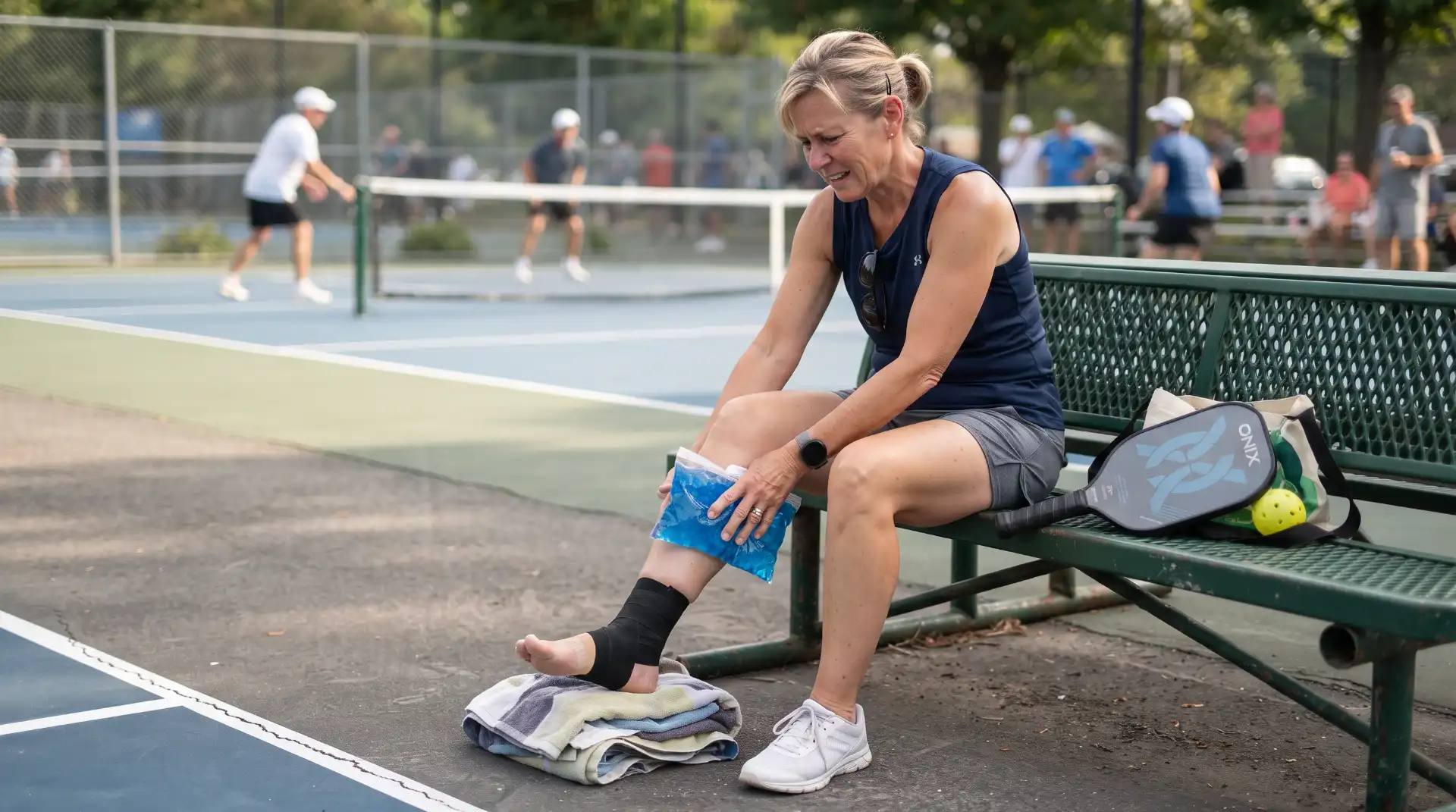
Ankle sprains are among the most common pickleball injuries because the sport involves quick changes of direction. A player may roll the ankle while lunging, pivoting, or moving laterally along the baseline. Uneven court surfaces, fatigue, and poor footwear can all increase the risk.
Some ankle sprains are mild, involving stretching of the ligaments. Others are more severe and may involve partial or complete ligament tears. Symptoms often include pain on the outside of the ankle, swelling, bruising, and instability when trying to walk. While some players try to “shake it off,” returning to the court too soon can worsen the injury and raise the chance of repeated sprains later.
Wrist and Hand Injuries
The wrist and hand absorb a lot of force in pickleball, both from gripping the paddle and from bracing during falls. Wrist sprains, tendon irritation, jammed fingers, and fractures can all occur. Repetitive paddle use may also aggravate the tendons in the forearm and wrist, leading to pain with gripping and rotating motions.
Hand injuries may seem minor at first, but they can interfere with daily activities as well as athletic performance. Pain when opening jars, typing, lifting groceries, or turning a doorknob may signal that the injury is more than a simple bruise.
Knee Sprains and Meniscus Problems
The knees work hard in pickleball. Reaching low balls, pivoting, stopping suddenly, and accelerating toward the net all place stress on the joint. Players can develop ligament sprains, patellar irritation, or meniscus injuries, especially if the foot stays planted while the upper body twists.
A mild knee sprain may cause soreness and swelling after play, while a more serious injury may produce catching, instability, or difficulty bending and straightening the leg. Some players describe a popping sensation at the time of injury. Persistent swelling or locking of the knee should be checked by a medical professional.
Muscle Strains
Muscle strains frequently affect the calves, hamstrings, groin, and lower back. These injuries often occur in players who begin playing without warming up or who return to exercise after a long break. Sudden starts and stops place high demand on soft tissues that may not be prepared for explosive movement.
Calf strains are particularly common when players push off quickly or lunge forward. Hamstring strains may happen during reaching or stretching movements. Back pain can develop from repeated bending and twisting, especially if the core muscles are weak. Although strains may heal with rest and gradual rehabilitation, playing through pain can delay recovery.
Shoulder and Elbow Overuse Injuries
Serving, overhead shots, and repeated paddle swings can irritate the shoulder and elbow. Some players develop rotator cuff irritation, shoulder tendinitis, or “tennis elbow,” which causes pain on the outer side of the elbow. These problems often build gradually rather than appearing after one dramatic moment.
At first, the discomfort may only show up after a long match. Later, it can begin earlier in play or even continue during rest. A player may notice weaker shots, soreness when lifting the arm, or pain while gripping the paddle. Overuse injuries are a signal that technique, training volume, or conditioning may need adjustment.
Head Injuries and Concussions
Head injuries are less common than sprains or strains, but they are important. A player can hit their head during a fall, collide with another player, or get struck by a paddle in doubles play. Symptoms of concussion may include headache, dizziness, nausea, confusion, sensitivity to light, or trouble concentrating. These symptoms should always be taken seriously.
Players should never continue a match if concussion is suspected. A proper medical evaluation is important, and return to activity should be gradual and guided by professional advice.
Who Is Most at Risk?
Anyone can get injured playing pickleball, but some groups face higher risk. Beginners are vulnerable because they are still learning movement patterns, shot selection, and positioning. Without experience, they may chase balls that are out of reach or move inefficiently, which raises the chance of awkward falls and muscle strains.
Older adults can also be at increased risk, especially for fractures after falls. Age-related changes in bone density, balance, reaction time, and flexibility all matter. This does not mean older adults should avoid pickleball. In fact, the sport can be a great way to stay active. It simply means prevention strategies are especially important.
Players with previous injuries should also be cautious. A history of ankle sprains, knee injuries, rotator cuff pain, or chronic low back problems can make reinjury more likely. Finally, those who play frequently without adequate rest may develop overuse issues even if they do not have a single memorable injury event.
Warning Signs You Should Not Ignore
Some soreness after physical activity can be normal, especially for people who are new to the sport. However, certain symptoms suggest something more significant. Severe swelling, bruising, inability to bear weight, numbness, joint instability, or pain that persists for several days should not be brushed aside. Likewise, any visible deformity or major loss of motion deserves prompt attention.
With head injuries, red flags include persistent headache, vomiting, confusion, dizziness, balance problems, or unusual sleepiness. These symptoms should be treated seriously. When in doubt, it is safer to stop playing and seek medical advice rather than assume everything will improve on its own.
How to Prevent Pickleball Injuries
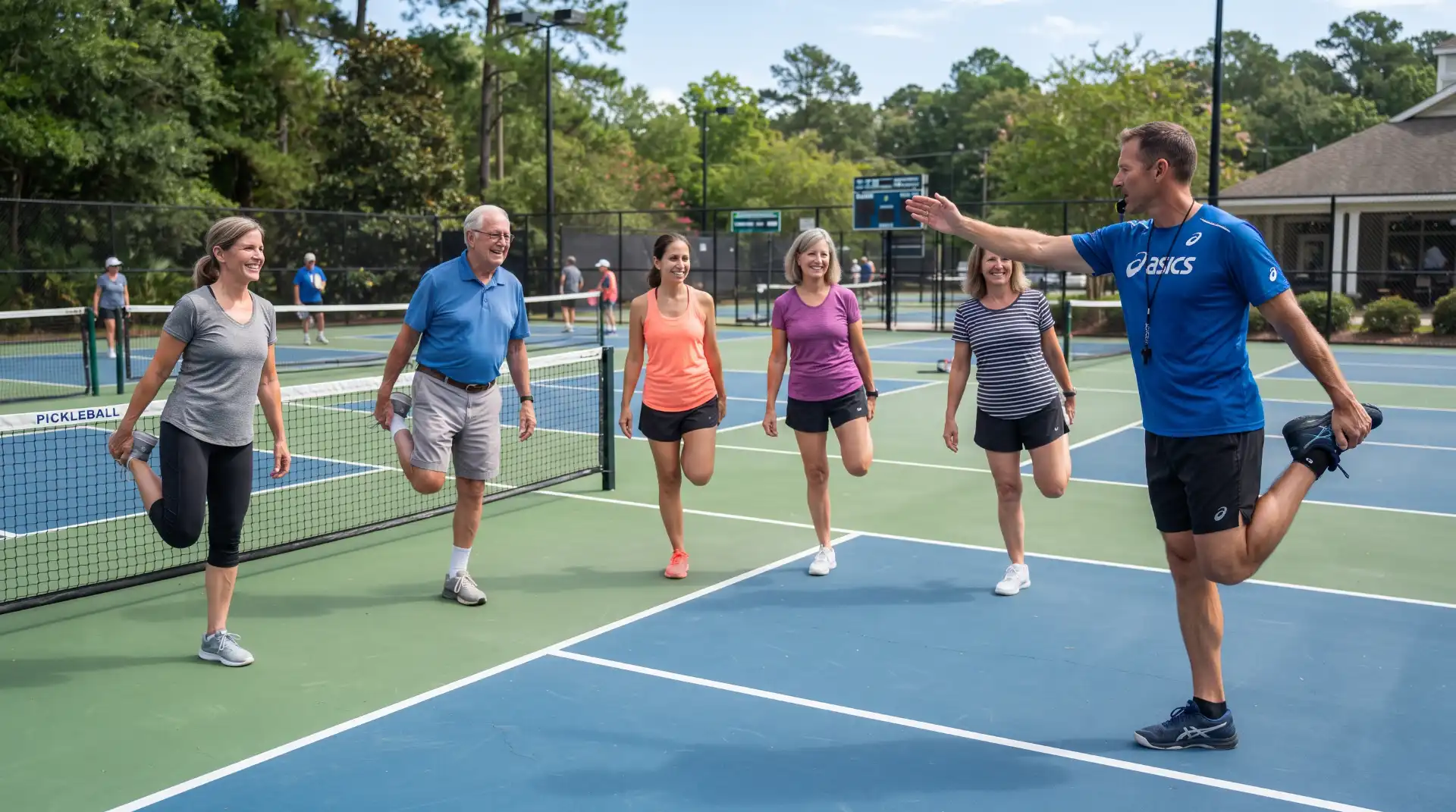
The good news is that many pickleball injuries are preventable. Prevention begins before the first serve. A proper warm-up is one of the simplest and most effective steps. Instead of walking onto the court and immediately starting a fast game, players should take several minutes to raise body temperature and prepare the joints. Light walking, side shuffles, arm circles, controlled lunges, and gentle mobility exercises can help the body transition into play.
Footwear also matters more than many new players realize. Running shoes are not always ideal for pickleball because they are designed primarily for forward motion. Court shoes generally offer better lateral support and traction for the side-to-side movement pickleball requires. Wearing shoes with poor support or worn-out soles can contribute to slips, ankle rolls, and knee stress.
Strength and balance training can make a significant difference as well. Stronger legs and core muscles improve stability, reduce fatigue, and help the body respond more safely to unexpected movements. Balance exercises are especially helpful for older players. Even a few sessions a week focused on calf strength, hip stability, core endurance, and single-leg balance can improve confidence on the court.
Technique is another important factor. Many recreational injuries happen because players overreach, backpedal carelessly, or swing harder than their body can handle. Learning proper footwork and efficient stroke mechanics from a qualified instructor can lower strain on the shoulders, elbows, knees, and ankles. Good doubles communication also helps prevent collisions, particularly when both players go for the same ball.
Players should also manage volume wisely. It is easy to get caught up in the fun of the game and play several matches in a row, especially during open court sessions or tournaments. But fatigue affects balance, reaction time, and judgment. Taking short breaks, hydrating, and stopping before form breaks down can reduce injury risk.
Finally, players should listen to early warning signs. Mild recurring pain is often the body’s signal that something needs to change. Resting for a day or two, reducing intensity, using ice for acute soreness, or scheduling a medical evaluation early can prevent a smaller issue from becoming a larger one.
Recovery After a Pickleball Injury
Recovery depends on the type and severity of the injury. Minor strains and mild sprains may improve with rest, activity modification, ice, compression, elevation, and gradual return to movement. More serious injuries, including fractures, major ligament injuries, and concussions, may require imaging, bracing, physical therapy, or even surgery.
One of the biggest mistakes injured players make is returning too quickly. Feeling “better” is not always the same as being ready for the demands of play. The injured area should be able to tolerate walking, turning, reaching, and sport-specific movement without significant pain or instability. A structured rehabilitation plan can help restore strength, flexibility, coordination, and confidence.
For reliable patient education on bone, joint, and sports injuries, the American Academy of Orthopaedic Surgeons offers helpful information that players may find useful during recovery and prevention planning.
Suggested Internal Link Opportunities
If you are building out related content on Injuries.wiki, this article can naturally link to other posts that support the topic. For example, you could add an internal link to an article about e-bike and e-scooter injuries when discussing active lifestyle injury trends. You could also link to an article about older adult falls when addressing fracture risk and balance issues. Another relevant internal link would be a post about preventing ACL injuries in teen athletes when discussing lower-extremity conditioning and movement mechanics.
Why Prevention Matters More Than Ever
As pickleball continues to expand across the United States, injury prevention becomes more important for communities, coaches, recreational players, and healthcare providers alike. The goal is not to discourage participation. On the contrary, pickleball offers valuable physical and social benefits. It can improve cardiovascular health, coordination, mood, and community connection. But enjoying those benefits long-term depends on staying healthy enough to keep playing.
The rise in pickleball injuries should be viewed as a reminder that even highly enjoyable recreational sports place real demands on the body. A sport does not need full-contact collisions to produce serious injuries. Repetitive motion, sudden changes in direction, and falls are enough. Awareness, preparation, and good habits can make a major difference.
Final Thoughts
Pickleball is here to stay, and for many Americans, that is a very good thing. It offers a welcoming way to stay active, challenge the body, and connect with others. Still, the growing popularity of the sport has been matched by a rise in pickleball injuries, including fractures, sprains, strains, and overuse conditions. The most common causes are falls, quick pivots, poor warm-up habits, inadequate footwear, and trying to do too much too soon.
Fortunately, prevention is possible. Players who warm up properly, wear supportive court shoes, improve strength and balance, pace themselves, and pay attention to technique can reduce many common injury risks. Those who experience persistent pain, major swelling, instability, or possible concussion symptoms should seek timely medical care rather than assume the problem will simply pass.
The safest approach is to treat pickleball like the real sport it is. Respect the movement demands, prepare the body, and recover appropriately when problems arise. Doing so can help players stay on the court longer and enjoy the game with fewer setbacks.