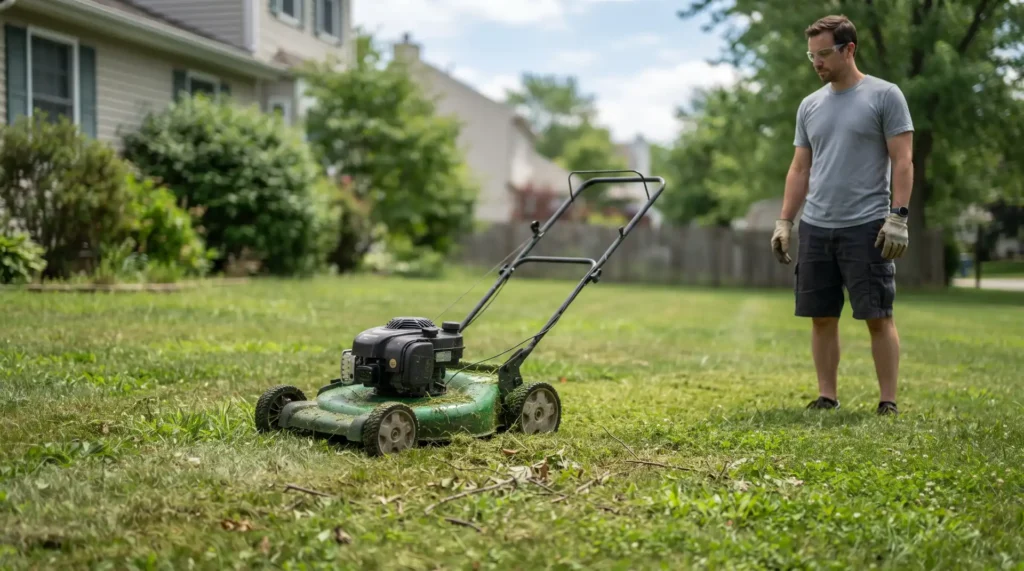
Maintaining a lawn may seem like one of the most ordinary household chores in the United States. Every week during the growing season, millions of homeowners, property managers, landscaping companies, municipal workers, and other groundskeepers use lawn mowers to maintain residential and commercial properties. Yet the equipment used for this routine task contains rapidly rotating blades, powerful engines, moving wheels, heavy components, and enough mechanical force to cause devastating injuries when something goes wrong.
Lawn mower injuries can happen in many different ways. A person may suffer a deep laceration after coming into contact with a moving blade, experience a fracture after falling from a riding mower, or sustain serious head trauma after being struck by an object thrown from beneath the mower deck. Riding mowers can also overturn on slopes, while children and other bystanders can be placed in danger when they approach a moving machine.
The risks are not limited to professional landscapers. Homeowners can also be seriously injured while mowing their own yards, clearing grass from a mower deck, repairing equipment, or attempting to operate a mower across difficult terrain.
Recent federal safety investigations demonstrate that these hazards remain relevant. In an April 2025 letter, staff at the U.S. Consumer Product Safety Commission reported reviewing 20 recent in-depth riding-mower investigations covering incidents from July 2022 through July 2024. Seven involved child run-over or back-over incidents, while 13 involved rollovers. CPSC staff specifically identified traumatic amputations and deaths among the serious consequences associated with these hazards.
Understanding how lawn mower accidents occur can help homeowners and workers recognize dangerous situations before they result in serious trauma.
Why Lawn Mowers Can Cause Serious Injuries
A lawn mower is much more than a simple gardening tool. Even a residential walk-behind mower contains a high-speed cutting mechanism capable of causing severe damage to fingers, feet, legs, and other parts of the body. Riding mowers add another layer of risk because the operator is seated on a heavy moving machine that can travel across slopes, uneven ground, ditches, and other terrain.
The danger increases when people become accustomed to using the equipment. Familiarity can create a false sense of security. Someone who has mowed the same yard hundreds of times may begin to perform tasks automatically, overlook a hazard, or attempt to save time by skipping a safety step.
Objects hidden in grass create another concern. Rocks, branches, pieces of metal, children’s toys, landscaping materials, and other debris can become projectiles when contacted by rotating mower blades. NIOSH has documented a fatal landscaping incident in which a metal pet tie-out stake was struck by a commercial mower and became a projectile that hit a nearby worker in the head.
This type of incident demonstrates why mowing hazards can affect people who are not actually operating the equipment.
Common Types of Lawn Mower Injuries
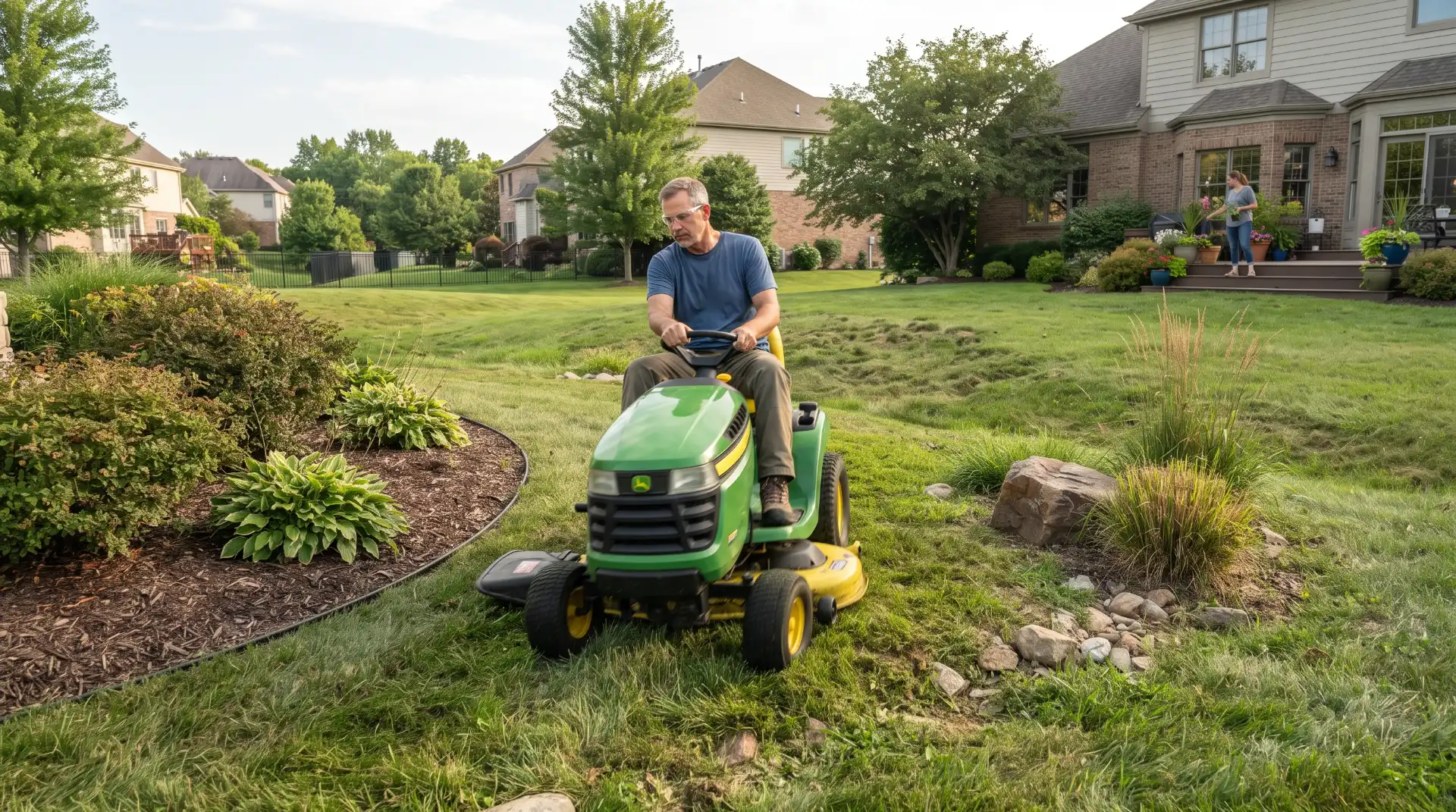
Lawn mower accidents can produce injuries ranging from minor cuts to permanent disability or fatal trauma. The severity depends on factors such as the type of mower, the speed of the machinery, the body part affected, the circumstances of the accident, and how quickly emergency treatment is provided.
Lacerations and Deep Cuts
Lacerations are among the most obvious hazards associated with mower blades. A person’s hand, foot, leg, or other body part can be severely cut if it comes into contact with a moving blade.
These accidents may happen when someone attempts to clear grass from underneath a mower deck while the blade is still capable of moving. They can also occur when an operator tries to reach around the machine while it is running.
A mower should never be treated as though the blades are harmless simply because the machine appears to be stopped. Mechanical components can continue moving after controls have been disengaged, and equipment can sometimes behave unexpectedly because of mechanical or electrical problems.
A NIOSH-documented case involved a landscaping worker who nearly lost a finger after reaching beneath a mower deck to check for wet grass buildup. Although the mower had been shut down, the blades had not completely stopped, resulting in a severe finger injury.
The incident illustrates an important principle: turning equipment off is only one part of safely performing maintenance or clearing a blockage.
Amputations
Some lawn mower accidents can result in traumatic amputations involving fingers, toes, feet, hands, or portions of the lower extremities.
Amputation injuries may occur when a person comes into contact with moving blades or becomes trapped beneath heavy equipment. They can also result from run-over incidents involving riding mowers.
CPSC staff has specifically identified traumatic amputations among the serious consequences associated with riding-mower run-over, back-over, and rollover incidents.
An amputation can permanently affect mobility, employment, independence, and quality of life. Treatment may involve emergency surgery, additional operations, rehabilitation, prosthetic devices, pain management, and long-term occupational or physical therapy.
Fractures and Broken Bones
Falls from riding mowers or collisions with landscaping equipment can cause broken bones. The wrists, arms, legs, ankles, ribs, shoulders, and hips may be affected depending on how the person lands.
Fractures can also occur when someone is struck by a heavy object or becomes trapped beneath overturned equipment.
Older adults may face additional concerns because falls can have more serious consequences when bone density and balance have changed with age. A seemingly minor fall can sometimes result in a significant fracture that requires hospitalization or surgery.
Head and Brain Injuries
A lawn mower accident can also cause a traumatic brain injury.
A person may hit their head during a fall from a riding mower, be struck by a projectile, or collide with another object after being thrown from equipment. Head injuries can range from concussions to more severe forms of traumatic brain injury.
For additional information about symptoms and treatment considerations, readers can explore Injuries Wiki’s guide to Understanding Traumatic Brain Injuries (TBI).
Symptoms following a head injury can include headache, dizziness, confusion, nausea, memory problems, difficulty concentrating, and changes in balance. More serious symptoms require urgent medical evaluation.
Crushing Injuries
Riding mowers are heavy machines. When one overturns or a person becomes trapped underneath it, the resulting force can cause crushing injuries to the chest, abdomen, legs, arms, or other body parts.
Crushing injuries can damage bones, muscles, blood vessels, nerves, and internal organs. In severe cases, they can become life-threatening.
NIOSH has documented fatal riding-mower rollover incidents in which operators became pinned beneath overturned machines. One investigation involved a mower operating on a steep slope that slid and rolled onto the operator.
Sprains, Strains, and Soft-Tissue Injuries
Not every lawn mower accident produces an obvious wound. Operators can also experience muscle strains, ligament injuries, back injuries, and other soft-tissue problems.
Pushing a heavy mower across difficult terrain can place stress on the back, shoulders, arms, and legs. Pulling or turning equipment repeatedly may also contribute to muscle strain.
Landscaping work generally involves additional physical demands, including lifting equipment, carrying materials, walking across uneven terrain, and working for long periods outdoors. NIOSH research into landscaping workers found overexertion among common causes of injury, along with injuries involving equipment and uneven ground.
Riding Mower Rollovers Are a Major Hazard
Riding mowers present risks that do not exist to the same extent with conventional push mowers.
The machine’s weight, center of gravity, speed, and terrain all affect its stability. A slope that appears manageable from the ground can become dangerous when a riding mower crosses it at an unfavorable angle.
Ditches are another major concern. If one side of the mower enters a ditch or the machine gets too close to an edge, the equipment can slide or overturn.
CPSC staff’s recent review of riding-mower incidents highlights the continuing importance of rollover prevention. In its review of 20 investigations, 13 involved rollover incidents.
Manufacturers provide operating instructions for their equipment, including limitations related to slopes and terrain. Operators should understand and follow the instructions for the specific mower rather than relying on general assumptions about what terrain is safe.
Why Slopes and Uneven Ground Are Dangerous
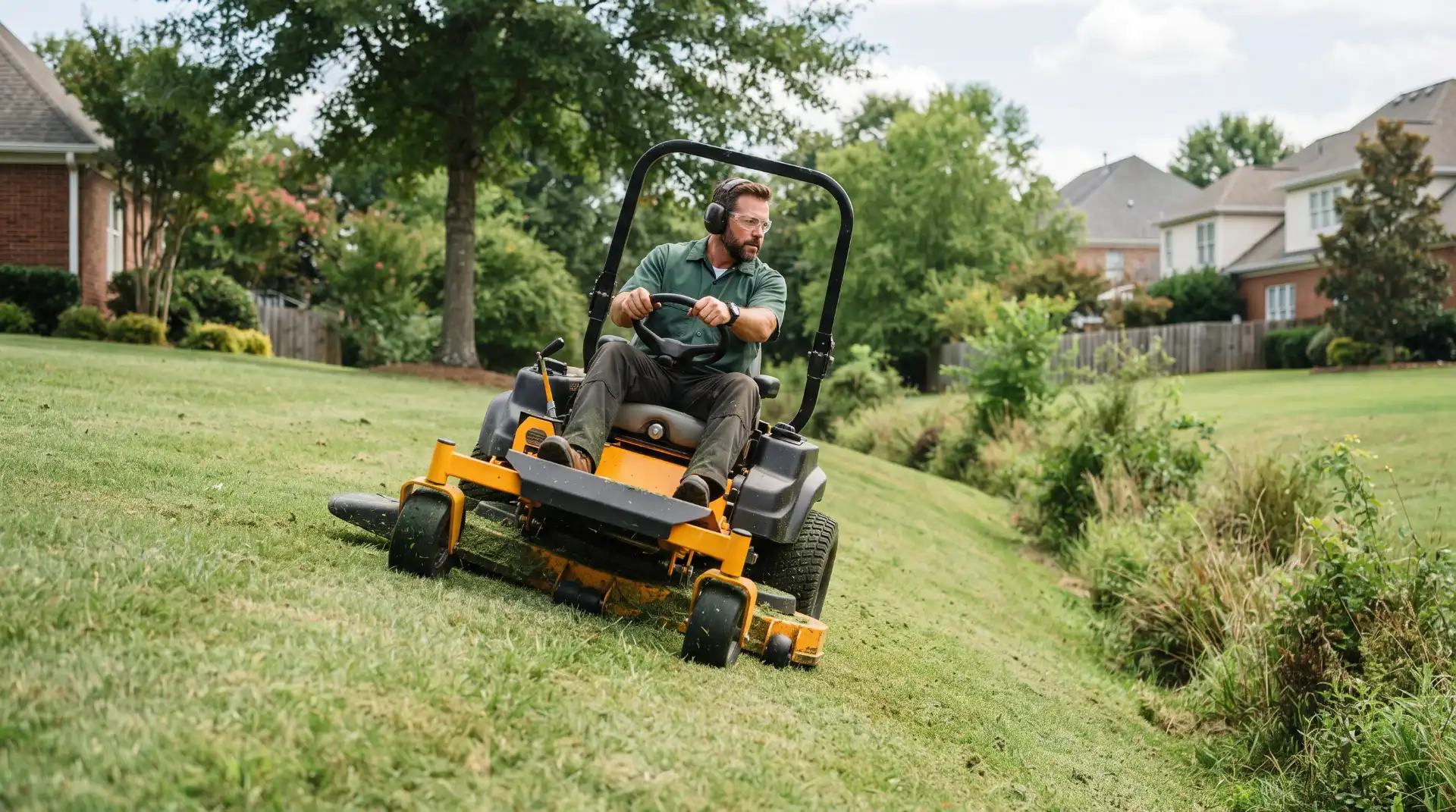
A mower can lose stability when operated across a slope, particularly when the terrain is steep, wet, uneven, or otherwise difficult to navigate.
Wet grass can reduce traction. Holes can cause wheels to drop suddenly. Rocks can destabilize equipment. Ditches can cause one side of the mower to sink or slide.
A documented NIOSH investigation of a fatal rollover involved an operator mowing horizontally across a 30-degree slope. The mower slid down the hill and rolled onto the operator. Investigators identified operation on a slope exceeding manufacturer specifications as one of the contributing factors.
The lesson is not simply to “drive carefully.” Operators need to understand the limitations of the specific machine and recognize when terrain is inappropriate for riding equipment.
Run-Over and Back-Over Accidents
Run-over accidents are particularly concerning when children are present.
A child may approach a parent or another adult who is operating a riding mower without the operator realizing the child is nearby. Small children can be difficult to see from the operator’s position, especially behind or beside a large machine.
Backing up creates an additional hazard because the operator’s view may be limited.
CPSC staff’s 2025 review found seven child run-over or back-over incidents among the 20 recent in-depth investigations it examined.
For families, a practical approach is to keep children completely away from the mowing area while equipment is operating. Children should not be treated as passengers, assistants, or observers near an active mower.
This issue also connects with the broader subject of childhood injury prevention. Injuries Wiki’s Children’s Injuries: Safety Tips for Parents provides additional information about reducing common injury hazards involving children.
Flying Objects Can Cause Serious Trauma
A lawn mower can turn ordinary yard debris into dangerous projectiles.
Before mowing, operators should inspect the lawn for objects that could be struck by the blades. Rocks, sticks, wire, toys, tools, pieces of metal, landscaping materials, and other debris can become airborne.
The danger does not necessarily stop with the person operating the mower. Anyone standing nearby can potentially be exposed to a projectile.
The documented NIOSH fatality involving a metal pet tie-out stake demonstrates just how serious this hazard can be. The mower struck the stake, broke part of it loose, and sent the metal projectile toward another worker. The worker suffered fatal blunt-force head trauma.
This is why maintaining a safe distance from operating mowing equipment is important for everyone on the property.
Wet Grass Can Increase the Risk
Wet grass can create multiple hazards at the same time.
The grass may make walking surfaces slippery, reducing the operator’s footing when pushing or maneuvering equipment. Wet material can also accumulate beneath a mower deck, creating a temptation to reach underneath and remove it.
Instead of attempting to solve a blockage while the mower is operating, the operator should follow the manufacturer’s shutdown and maintenance instructions.
Wet conditions can also make slopes and uneven terrain more difficult to navigate. If traction is compromised, a riding mower may become harder to control.
Waiting for safer mowing conditions can reduce unnecessary risk.
Lawn Mower Maintenance Can Cause Injuries
Some mower accidents happen when the equipment is being repaired rather than operated.
Changing blades, clearing grass, inspecting belts, replacing components, working around engines, or troubleshooting electrical systems can expose people to mechanical hazards.
The danger is especially high when someone assumes that the mower cannot start because the ignition appears to be off.
Maintenance should follow the manufacturer’s instructions, and people should not attempt repairs they are not trained or equipped to perform.
Professional landscapers should receive appropriate equipment training before being assigned to operate or maintain machinery. NIOSH’s research into landscaping injuries emphasizes the importance of understanding equipment hazards and working conditions.
Product Defects and Lawn Mower Recalls
Not every mower injury is caused by operator behavior.
Manufacturing defects, defective components, design problems, or inadequate safety mechanisms can also contribute to injuries.
For example, the CPSC announced a 2024 recall involving certain DeWALT battery-powered walk-behind mowers because water entering the handle support could cause the mower to fail to shut off when the bail handle was released or start without a key. The company reported 10 incidents involving failure to shut off and one incident involving starting without a key; that incident resulted in a finger laceration.
Another CPSC recall involved certain DR Power tow-behind field and brush mowers. The agency reported that a blade carrier spindle bolt could loosen, allowing the blade assembly to detach and creating a laceration hazard.
These examples show why owners should periodically check for recalls affecting their particular equipment.
If a manufacturer or government agency announces a recall, owners should follow the specified instructions rather than continuing to use potentially hazardous equipment.
Fuel, Fire, and Burn Hazards
Gas-powered lawn equipment can present additional hazards involving fuel and hot engine components.
Fuel leaks may create fire risks, particularly when gasoline comes into contact with hot components or an ignition source.
CPSC has issued recalls involving lawn mower engines because of fuel-related defects. In one 2023 recall involving certain Kawasaki engines used on riding mowers, a damaged high-pressure fuel line could leak fuel and create burn and fire hazards.
Operators should follow manufacturer instructions for fueling, storage, maintenance, and cooling. Refueling a hot machine can create avoidable risks.
Gasoline and other flammable materials should also be stored according to applicable safety instructions and away from ignition sources.
Lawn Mower Injuries in Professional Landscaping
Professional landscaping crews face many of the same risks as homeowners, but exposure can be much greater because workers may operate equipment for many hours each week.
A landscaping worker may operate several types of mowers during one shift while also using trimmers, blowers, edgers, chainsaws, trailers, and other equipment.
Workers may also operate around other crew members, pedestrians, vehicles, trees, slopes, irrigation systems, electrical hazards, and construction materials.
NIOSH analyzed more than 18,000 workers’ compensation claims from the landscaping services industry in Ohio covering 2001 through 2017. The analysis found that overexertion and being struck by an object were among common injury causes, with sprains and fractures among frequent serious injuries. The study also identified mower injuries, falls, uneven ground, and equipment-related incidents among the circumstances appearing in serious claims.
Professional crews therefore need more than basic instructions. Employers should establish clear equipment procedures, provide training, maintain machinery, and address hazards specific to the worksite.
This topic also fits naturally with Injuries Wiki’s existing resource on Workplace Injury Types and How to Prevent Them.

Common Prevention Practices for Homeowners
Preventing lawn mower injuries starts before the engine is turned on.
The lawn should be inspected for rocks, branches, toys, wires, tools, and other objects. Children and pets should be kept away from the operating area. Operators should wear appropriate clothing and footwear and use protective equipment recommended by the manufacturer.
The mower should be used according to its operating manual. Operators should understand the machine’s limitations, especially when working near slopes, ditches, obstacles, or other difficult terrain.
People should never attempt to bypass or disable safety features simply because they seem inconvenient.
The mower should also be maintained according to the manufacturer’s schedule. Damaged components, worn blades, faulty controls, or unusual operating behavior should be addressed before the equipment is returned to service.
What to Do Immediately After a Lawn Mower Accident
A serious lawn mower accident should be treated as a medical emergency.
If someone suffers severe bleeding, an amputation, a crushing injury, loss of consciousness, serious breathing problems, or another life-threatening injury, emergency medical assistance should be requested immediately.
The equipment should not be restarted or moved unnecessarily if doing so could place someone else at risk. If the scene can be preserved safely, it may also be important to document what happened.
For less obvious injuries, medical evaluation can still be important. Pain or symptoms may not fully appear immediately after an accident, particularly with some head, back, or soft-tissue injuries.
A medical professional can determine whether imaging, observation, medication, surgery, physical therapy, or another treatment is appropriate.
Documenting a Lawn Mower Accident
Documentation can become important when an injury involves a workplace, rental property, landscaping company, defective equipment, or another potentially responsible party.
Photographs can help show the condition of the mower, terrain, property, debris, slope, and surrounding area. The equipment’s make, model, serial number, and maintenance information may also be relevant.
Owners should preserve receipts, repair records, manuals, and recall information when available.
Witnesses can provide information about how the accident happened, particularly when the injured person was unable to observe every part of the incident.
Medical records are also important because they document the injuries diagnosed and the treatment provided.
When Property Maintenance Leads to a Legal Issue
A lawn mower accident can raise different legal questions depending on where and how the accident occurred.
If a homeowner is injured while using their own mower, the situation may primarily involve medical treatment, insurance, or a possible product-defect issue.
If a landscaping employee is injured while performing work, workers’ compensation laws may become relevant.
If a visitor, neighbor, child, or passerby is injured because of mowing activity, questions about negligence, property conditions, warnings, supervision, or other circumstances may arise.
If a defective mower or component contributed to the injury, product liability may also become an issue.
There is no single rule that determines responsibility in every lawn mower accident. The facts of the incident, the parties involved, applicable state law, insurance coverage, and evidence can all affect the legal analysis.
Anyone facing a significant injury or disputed claim should consider obtaining advice from a qualified professional familiar with the applicable jurisdiction.
The Connection Between Lawn Mower Accidents and Slip-and-Fall Injuries
Lawn maintenance can also create conditions that contribute to falls.
Wet grass, uneven ground, holes, loose landscaping materials, hoses, branches, and other obstacles can cause someone to lose their footing.
A person may fall while pushing a mower, walking behind a mower, carrying equipment, or moving around a property after mowing.
Injuries Wiki’s existing guide on Common Causes of Slip and Fall Accidents explains how wet surfaces, uneven areas, outdoor hazards, poor lighting, and property-maintenance issues can contribute to falls.
This overlap is important because property maintenance does not involve just the machinery itself. The condition of the entire work area can influence injury risk.
Older Adults and Lawn Mower Safety
Older adults may continue to perform their own yard work for many years, but physical changes can affect how safely they operate heavy equipment.
Reduced balance, slower reaction time, limited strength, reduced vision, and changes in mobility can make certain mowing tasks more difficult.
Slopes deserve particular attention because maintaining control of a heavy machine requires strength and stability.
A person who finds a particular yard difficult to mow safely may consider using a professional landscaping service or selecting equipment better suited to the terrain.
The goal should not be to discourage people from maintaining their properties. Instead, it is important to recognize when a task has become more physically demanding than it once was.
Why Safety Training Matters
Safety training should not be limited to professional landscapers.
Homeowners should read the owner’s manual before operating unfamiliar equipment and should understand the mower’s controls, safety systems, terrain limitations, and maintenance requirements.
Employers have additional responsibilities when workers use commercial mowing equipment. Training should address the actual equipment and conditions employees will encounter rather than relying solely on generic instructions.
Workers should also understand procedures for reporting damaged equipment, hazardous terrain, near misses, and unsafe conditions.
A strong safety program treats near misses as opportunities to correct hazards before someone gets seriously injured.
Lawn Mower Safety Is About More Than the Operator
One of the most important concepts in preventing mower injuries is recognizing that the operator is not the only person at risk.
Children, pets, coworkers, pedestrians, neighbors, and other people on or near the property can be affected by an accident.
A projectile can travel away from the machine. A riding mower can back toward someone who is difficult to see. A rollover can occur when another person is nearby. A mechanical failure can create an unexpected hazard.
Creating a safe mowing environment therefore requires attention to the entire area around the equipment.
Building a Safer Property-Maintenance Routine
A safer mowing routine can become habitual.
Before starting, inspect the lawn and remove objects that could become projectiles. Make sure children and pets are safely away from the work area. Check the mower for obvious problems and verify that safety equipment is functioning as intended.
During mowing, maintain awareness of terrain, slopes, obstacles, people, and changing conditions. Avoid unnecessary distractions and do not rush through difficult sections.
When the job is finished, shut the equipment down according to the manufacturer’s instructions. Maintenance and cleaning should be performed only when the machine has been made safe for the specific task.
These steps may take a few extra minutes, but they can reduce exposure to hazards that have the potential to cause permanent injury.
Final Thoughts on Lawn Mower Injuries
Lawn mowing is an ordinary part of property maintenance across the United States, but the equipment involved should never be treated as harmless.
Lawn mower injuries can include deep lacerations, amputations, fractures, crushing injuries, burns, head trauma, and other serious conditions. Riding mowers create additional risks involving rollovers and run-over incidents, while flying debris can injure people who are standing well away from the machine.
Recent CPSC investigations demonstrate that riding-mower rollover and run-over hazards remain an active safety concern. NIOSH research and incident investigations likewise demonstrate how equipment, terrain, debris, falls, and maintenance practices can contribute to serious landscaping injuries.
The most effective approach is to treat lawn equipment with the same respect given to other powered machinery. Read the manufacturer’s instructions, inspect the property before mowing, keep children and bystanders away, use appropriate protective equipment, avoid unsafe terrain, and never place hands or other body parts near moving mower components.
For homeowners and professional groundskeepers alike, careful preparation and consistent safety practices can make routine property maintenance substantially safer.
Medical and legal information disclaimer: This article is intended for general educational and injury-prevention purposes. It is not a substitute for professional medical diagnosis, treatment, or legal advice. Anyone who suffers a serious lawn mower injury should seek appropriate medical attention, and legal questions should be discussed with a qualified attorney familiar with the applicable state laws.